Red eyes are one of the most common reasons people visit a pharmacy before they ever visit a doctor. The instinct is understandable — there are dozens of over-the-counter eye drops that promise to get the red out. Some of them work, briefly. But when redness keeps coming back, when it has been present for months, when drops stop helping as quickly as they used to — that is when the redness is telling you something important that drops cannot fix.
At Toluca Lake Optometric Center in Burbank, CA, chronic ocular redness is one of the most common presenting complaints we see in our dry eye and red eye management clinic. And the majority of the time, the cause is not what patients expect.
Why the Eye Gets Red
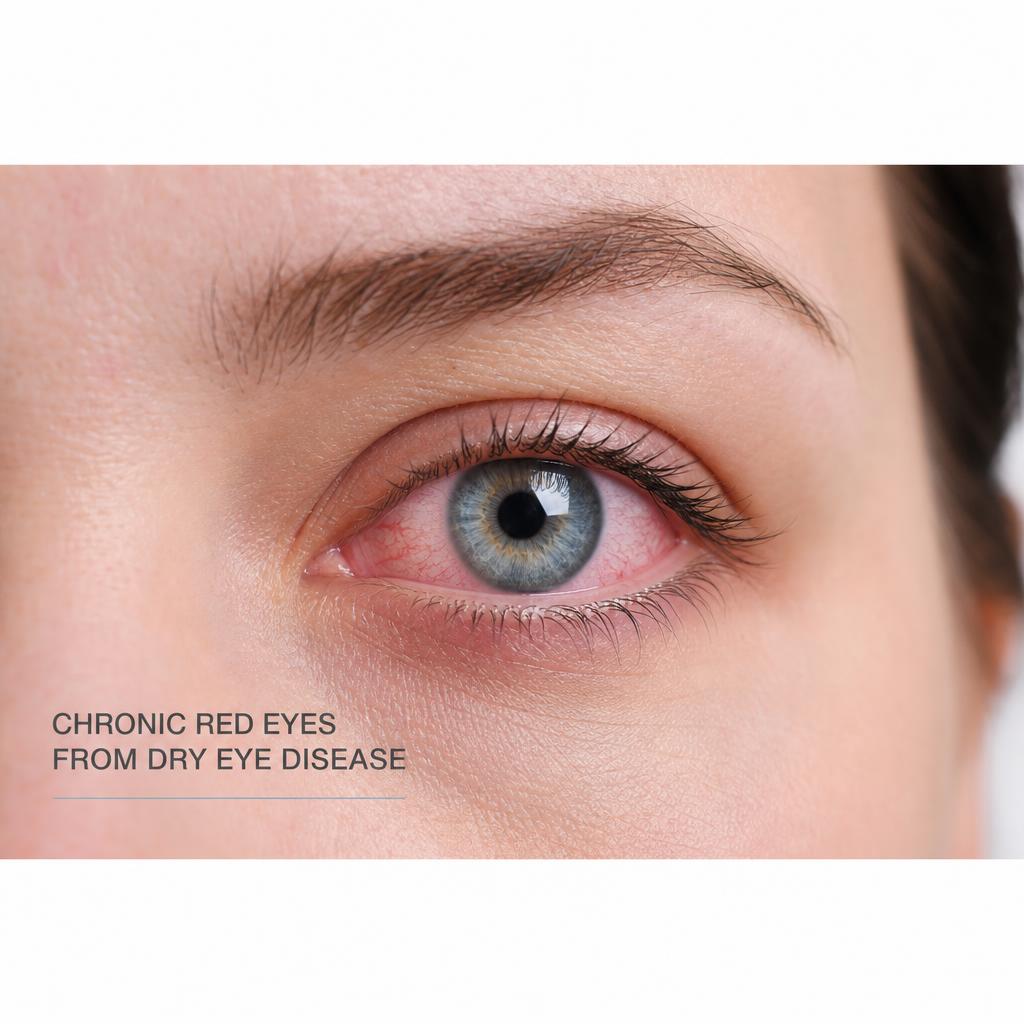
The white of the eye (sclera) is covered by the conjunctiva — a clear membrane fed by a network of small blood vessels. When these vessels dilate, the eye appears red. The vessels dilate in response to irritation, inflammation, or dryness.
Key sources of that irritation include:
Meibomian gland dysfunction and evaporative dry eye. When the tear film is unstable and the ocular surface dries out between blinks, the exposed cells release inflammatory signals that dilate conjunctival vessels. The eye looks red because it is chronically, mildly inflamed from surface dryness. This type of redness tends to be diffuse, present most of the day, and worst in the morning and evening.
Blepharitis. Chronic inflammation of the eyelid margins almost always produces secondary conjunctival redness. The inflamed lid is in direct contact with the eye with every blink, and the inflammatory mediators spread easily. Patients with blepharitis often notice redness that is worse along the lid margins and inner corner of the eye.
Demodex blepharitis. The mite-related form of lid disease creates a particularly persistent form of eyelid and conjunctival inflammation. Patients with Demodex often have redness they cannot explain — no obvious allergen, no infection — because the mites go undetected unless specifically assessed.
Ocular rosacea. Rosacea-related eyelid disease causes the same type of low-grade, chronic conjunctival redness that is directly tied to the vascular and inflammatory activity in the lids.
Rebound redness from vasoconstrictors. This is critical. Many people use vasoconstrictive drops (like Visine or other "get the red out" products) regularly to keep their redness under control. These drops work by constricting the conjunctival vessels. Over time, the vessels become dependent on the drug — when the drop wears off, they dilate more than before. Patients end up needing the drops more and more frequently to maintain the same effect, while the underlying cause goes completely unaddressed. This is rebound redness, and it is extremely common.
When to See a Dry Eye Specialist
Redness that warrants specialized evaluation rather than another pharmacy drop includes:
- Redness present most days for more than two to four weeks
- Redness that comes back within hours of using artificial tears or vasoconstrictors
- Redness accompanied by burning, gritty feeling, or light sensitivity
- Redness worse in air-conditioned environments, on screen-heavy days, or in the morning
- Redness with eyelid inflammation, crusting, or itching
- Redness in a contact lens wearer
- Redness that does not respond to allergy drops if allergies are suspected
Any of these patterns suggest the redness is driven by something structural — meibomian gland dysfunction, blepharitis, or surface inflammation — that requires directed treatment.
What We Do Differently for Chronic Redness
When a patient comes to us with chronic red eyes, we evaluate the underlying cause — not just the redness itself.
This means looking at:
- The tear film and its stability
- The meibomian glands with infrared imaging
- The eyelid margins for signs of blepharitis, rosacea, or Demodex collarettes
- The conjunctival and corneal surface for staining patterns
- The medication history, including current use of vasoconstrictors
From there, we address the actual driver. If meibomian gland dysfunction is causing the surface dryness and inflammation, IPL and gland expression are often the most effective path. If Demodex is involved, targeted treatment with lotilaner or demodex-specific lid hygiene is necessary. If rebound redness from vasoconstrictors is a component, we help patients discontinue those products safely while treating the underlying cause.
The redness improves when the cause improves — not before.
Getting Lasting Relief in Burbank
If your eyes have been chronically red for weeks or months and drops are not providing lasting relief, a dry eye evaluation is the right next step.
Call Toluca Lake Optometric Center in Burbank, CA at (818) 841-1212 to schedule an appointment.