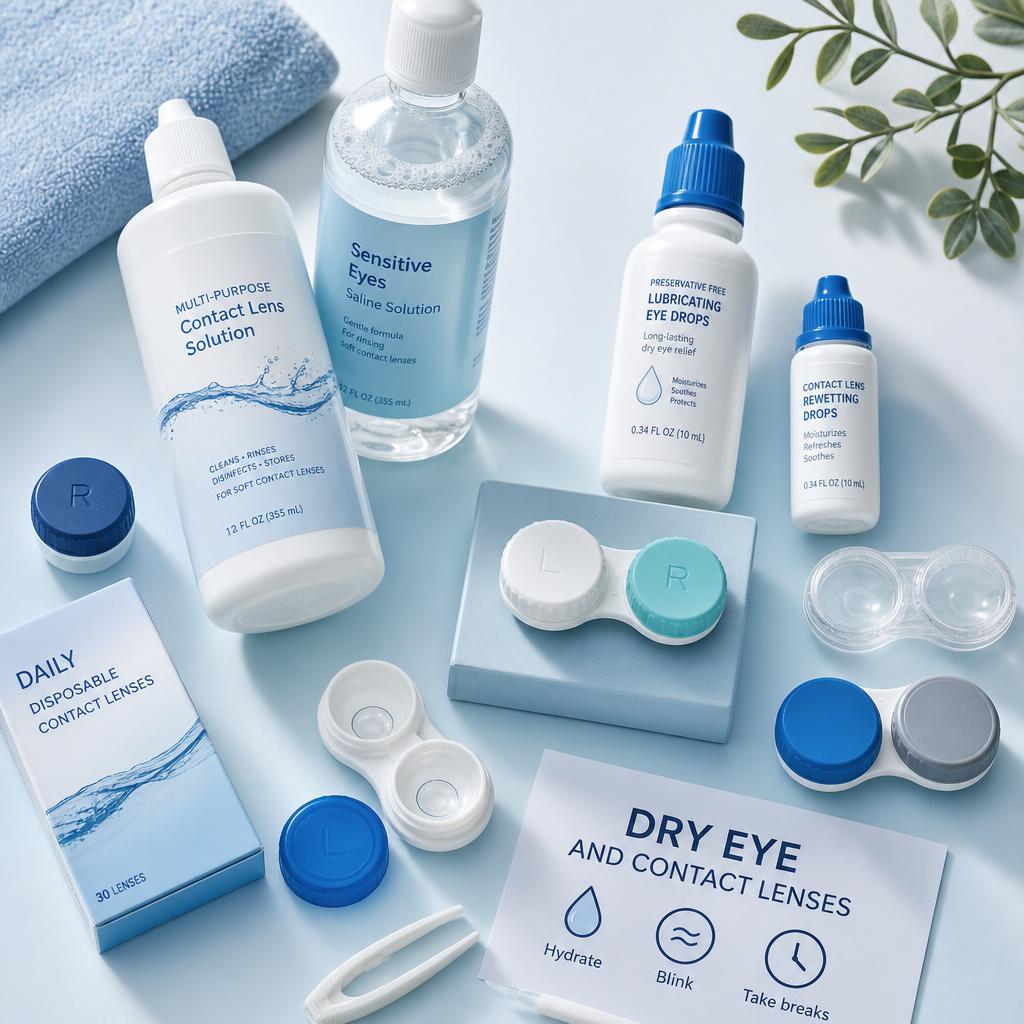
There is a recognizable pattern in dry eye care: a patient wears contact lenses comfortably for years, then gradually finds that they can only wear them for six hours. Then four. Then they start leaving them out entirely because the discomfort has become too significant. By the time they come in, they have often already tried multiple lens brands and solutions, and they are beginning to think contacts just aren't for them anymore.
At Toluca Lake Optometric Center in Burbank, CA, this pattern almost always points to the same underlying issue — meibomian gland dysfunction and evaporative dry eye that has gradually worsened, with contact lens wear amplifying the symptoms to an intolerable degree.
The lens isn't the cause. The dry eye is. And that distinction changes everything about how to approach it.
Why Contact Lenses Make Dry Eye Worse
A contact lens floats on the tear film that covers the eye's surface. In a healthy eye with a stable tear film, the lens is comfortable because it stays properly hydrated throughout the day. In an eye with meibomian gland dysfunction and an unstable tear film, several things go wrong:
The tear film doesn't support the lens properly. Without an adequate oil layer from functional meibomian glands, the aqueous layer beneath the lens evaporates quickly. The lens dries out. Lens-cornea friction increases. The result is that gritty, uncomfortable sensation of wearing a dried-out lens.
The lens disrupts what's left of the tear film. The lens itself divides the tear film into a pre-lens film (on top of the lens) and a post-lens film (between the lens and the cornea). In someone with inadequate oil production, the pre-lens film breaks apart even faster than the natural film would, creating additional instability.
The lens increases evaporation. Contact lenses increase the rate at which the tear film evaporates from the ocular surface. For someone with borderline tear film stability, this pushes them over the threshold into discomfort.
The lens wicks water from the eye. Certain lens materials, especially older hydrogel designs, absorb water — including moisture from the tear film itself — as the day progresses. High-water-content lenses can become net takers of moisture rather than just neutral objects on the eye.
What Doesn't Work
The standard approach to lens-related dry eye — changing solutions, trying a different brand, or simply using more drops — produces limited results because it doesn't address the meibomian gland dysfunction driving the problem. Different solutions can reduce deposits and surface interaction, but they can't fix an inadequate tear film lipid layer. Rewetting drops help temporarily but wear off quickly on a contact-lens-covered surface.
What Does Work
Treating the underlying dry eye. This is the single most impactful intervention for contact lens intolerance related to MGD. When the meibomian glands are functioning properly — producing consistent, high-quality oil that stabilizes the tear film — the same patient who was struggling to wear lenses for four hours often finds they can wear them comfortably again.
IPL with OptiLight targets the inflammatory drivers of meibomian gland dysfunction and improves gland secretion quality. Meibomian gland expression clears blocked glands. Lid disease treatment removes the chronic inflammation that impairs gland function. For many patients, a course of these treatments restores enough tear film stability to make contact lens wear comfortable again.
Lens material selection. Not all lens materials perform equally in dry eye conditions. Silicone hydrogel lenses have higher oxygen permeability and generally hold their water content more consistently throughout the day. Water gradient designs — where the lens surface is maximally hydrated at the outer layer — are specifically engineered for comfort in dry eye-prone wearers. Daily disposables eliminate the deposit accumulation that happens with reusable lenses.
Scleral lenses. For patients with more significant ocular surface disease who still want to wear contact lenses, scleral lenses are a game-changer. These large-diameter rigid lenses vault completely over the cornea and rest on the sclera, creating a fluid-filled chamber between the lens and the corneal surface. That fluid reservoir essentially bathes the eye throughout the day — patients with severe dry eye who cannot wear any other lens often achieve excellent comfort and vision with sclerals.
Reduced wear time during treatment. For patients actively undergoing dry eye treatment, temporarily reducing daily wear time while the glands recover can allow the ocular surface to heal and stabilize faster.
Getting Back into Lenses Comfortably
Contact lens intolerance doesn't have to mean the end of lens wear. It usually means there's an underlying dry eye condition that hasn't been properly evaluated and treated.
At Toluca Lake Optometric Center, we evaluate the meibomian glands, tear film, and ocular surface in detail before deciding what's driving lens discomfort — and then we treat the cause rather than just trying another brand.
Call us in Burbank at (818) 841-1212 to schedule an evaluation if contact lens discomfort has been limiting you.